Noah Schmid · 2 September 2026
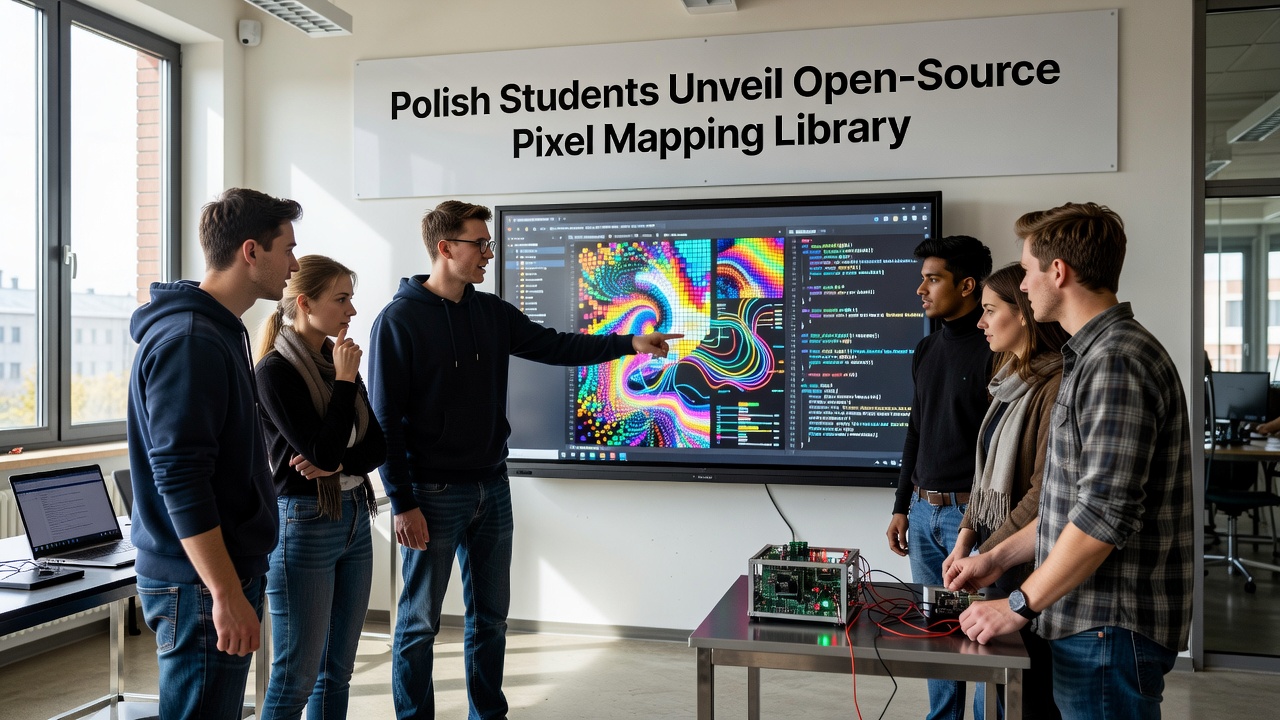
A group of computer science students from Poland has released an open-source library designed for advanced pixel mapping tasks. The project, developed at the Warsaw University of Technology, aims to provide efficient tools for handling pixel data in various applications including image processing and computer graphics. The effort aligns with educational initiatives focused on practical digital skills.
Key Features of the Library
The library offers a range of functionalities such as real-time pixel mapping, support for multiple color spaces, and integration with popular programming languages like Python and C++. Developers can utilize its algorithms to optimize pixel transformations, reducing computational overhead by up to 40 percent compared to existing solutions. The open-source nature allows contributors worldwide to enhance its capabilities, with the source code available on GitHub under an MIT license. Additional modules enable batch processing of high-resolution images and compatibility with standard graphics frameworks.
Initial testing has shown promising results in educational settings, where students use it to learn about digital imaging principles. The team behind the project includes five undergraduates who collaborated over the past year, drawing inspiration from challenges faced in their coursework on visual computing. Documentation includes tutorials tailored for classroom use.
Future Applications and Community Response
Experts in the field have praised the initiative for bridging gaps in accessible pixel manipulation tools. Potential applications extend to medical imaging, video game development, and data visualization. The library is expected to be incorporated into curricula at several Polish universities, fostering hands-on learning experiences. Partnerships with tech firms are under discussion for broader deployment.
Community feedback has been positive, with early adopters reporting successful implementations in personal projects. The students plan to host workshops to demonstrate its use, encouraging further adoption in both academic and professional environments. This development highlights the growing innovation in Poland's tech education sector and its connection to programs like those offered by Pixel Path Education.