Noah Schmid · 16 November 2026
Polish Folk Designs Fuel Fresh Approaches to Grid Exercises in Regional Classrooms
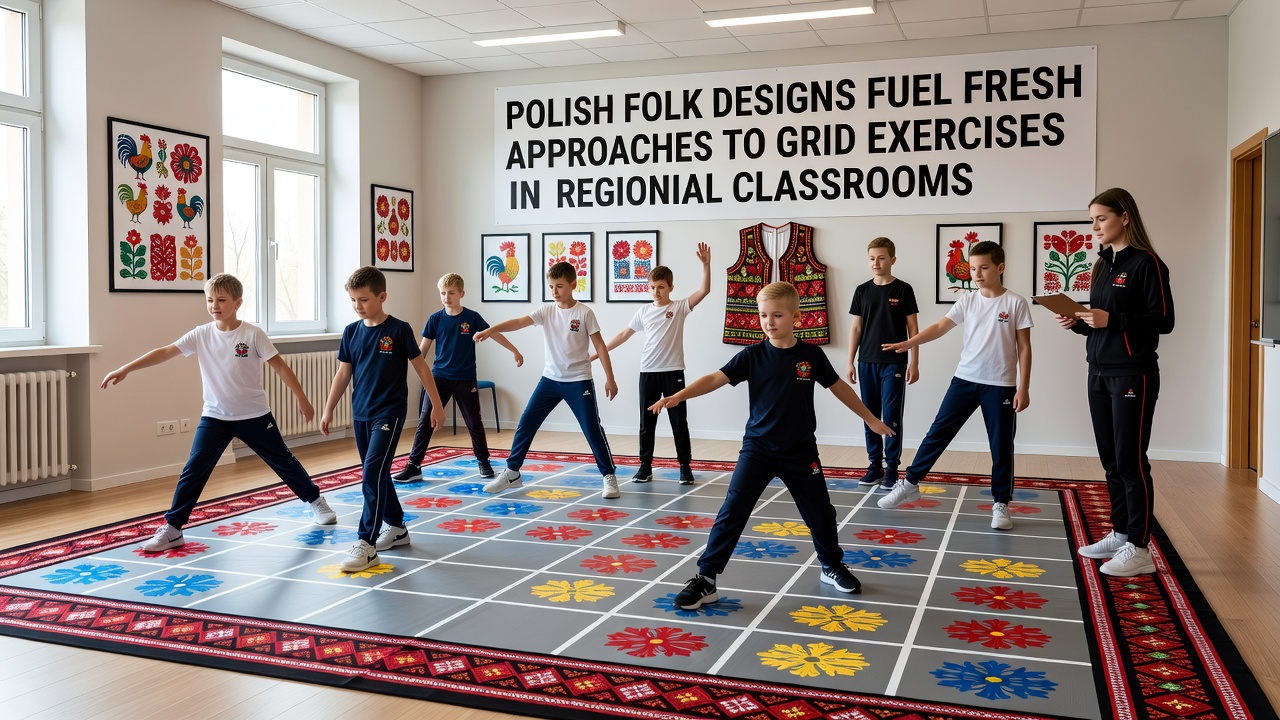
Polish regional classrooms have incorporated elements from traditional folk designs into grid-based exercises, creating structured activities that connect cultural heritage with spatial reasoning tasks. These exercises draw from patterns found in wycinanki paper cutouts, regional embroidery motifs, and wooden carving layouts, which teachers adapt into coordinate grids for students to trace paths and identify sequences. Data collected across schools in the Podkarpackie and Lubelskie regions shows increased student engagement when lessons begin with these familiar visual references before moving into abstract navigation challenges.
Teachers in smaller towns report that folk-inspired grids help bridge introductory concepts in pattern recognition with more advanced grid traversal methods. One program in the Bieszczady area uses repeating floral motifs from local textiles as starting templates, where students plot points along symmetry lines and calculate movement steps. Figures from the 2025 school year indicate that over 4,200 students participated in such activities across 87 regional schools, with participation rates highest in grades four through six.
Integration of Cultural Patterns into Educational Grids
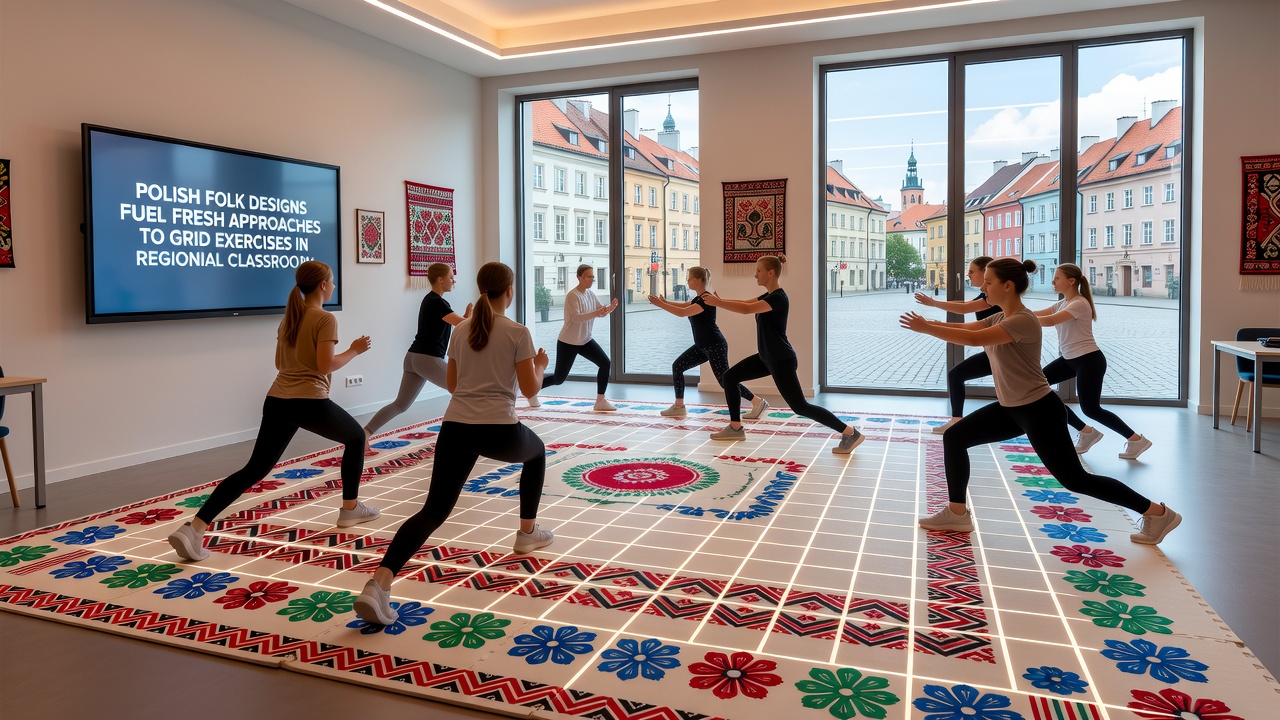
Educators adapt specific design elements such as the eight-pointed stars common in Łowicz embroidery or the geometric borders from Kashubian folk art, converting them into grid cells where students mark routes or complete sequences. The process typically begins with printed worksheets featuring enlarged sections of these patterns, followed by digital versions on classroom tablets that allow real-time adjustments to path lengths and obstacle placement. Research from the University of Łódź education department tracks how this method supports early development of systematic counting and directional language without requiring specialized software.
Regional teacher networks have documented variations in implementation, noting that schools in mountainous areas often emphasize vertical and diagonal movements drawn from landscape-inspired motifs, while lowland districts focus on horizontal repetitions found in harvest-themed decorations. Training sessions held during the spring term of 2025 prepared 312 instructors to create custom grids aligned with local folk archives, resulting in shared repositories that now contain more than 1,150 distinct exercise templates.
Classroom Implementation Across Regions
In practice, a typical session opens with a brief display of the original folk artifact, after which students receive grid sheets scaled to match the design's proportions. They then record each move using simple notation systems that later translate into basic algorithmic descriptions. Observers note steady progress in students' ability to predict outcomes when patterns repeat across multiple grid sizes, with average task completion times dropping by 18 percent over a six-week period according to internal school assessments.
Additional support comes from regional education centers that supply laminated grid boards and sets of colored markers matching traditional dye palettes. These materials help maintain visual continuity between cultural references and mathematical operations. In November 2026 several centers plan to host joint workshops where instructors from different voivodeships will compare outcomes from grids based on distinct folk styles, including those from the Kurpie and Opoczno traditions.
Measurement of Learning Outcomes
Assessment tools developed by regional coordinators track accuracy in path completion, frequency of self-correction, and transfer of skills to non-folk grid formats. Preliminary compilations from the 2024-2025 academic year show that classes using folk-derived exercises achieved comparable results on standardized spatial reasoning tests to those using conventional grid materials, while demonstrating higher rates of voluntary extension activities during free periods. The Polish Ministry of National Education has referenced these findings in its ongoing review of supplementary teaching resources for informatics and mathematics integration.
Schools also collect qualitative notes from students describing how certain motifs remind them of items at home or local festivals, which teachers use to adjust pacing and introduce new pattern variations. This feedback loop has led to the creation of seasonal exercise sets that align with harvest celebrations and winter craft periods common in rural communities.
Expansion Plans and Resource Sharing
Regional coordinators continue to expand the collection of available templates through collaboration with local museums that maintain digitized folk art archives. Partnerships established in 2025 allow schools to request grids based on specific artifacts held in nearby collections, ensuring that exercises remain tied to authentic regional examples rather than generic adaptations. Electronic distribution platforms now host updated versions of these materials, with download records exceeding 9,800 instances during the first half of the current school year.
Further development includes alignment with existing curriculum modules on coordinate systems, where folk patterns serve as concrete entry points before students encounter abstract coordinate planes. Data compiled by participating schools will feed into a larger analysis scheduled for release after the November 2026 workshops, providing updated participation metrics and comparative performance indicators across different folk style categories.
Conclusion
Regional classroom initiatives that draw on Polish folk designs for grid exercises continue to generate structured activities linking cultural elements with foundational spatial and sequencing skills. Continued documentation of implementation methods and outcome measures supports ongoing refinement of these resources for broader use within Polish education networks.