Frankie Hansen · 2 November 2026
From Sketchbooks to Code: The Role of Hand-Drawn Pixel Maps in Developing Computational Thinking Among Polish Teenagers
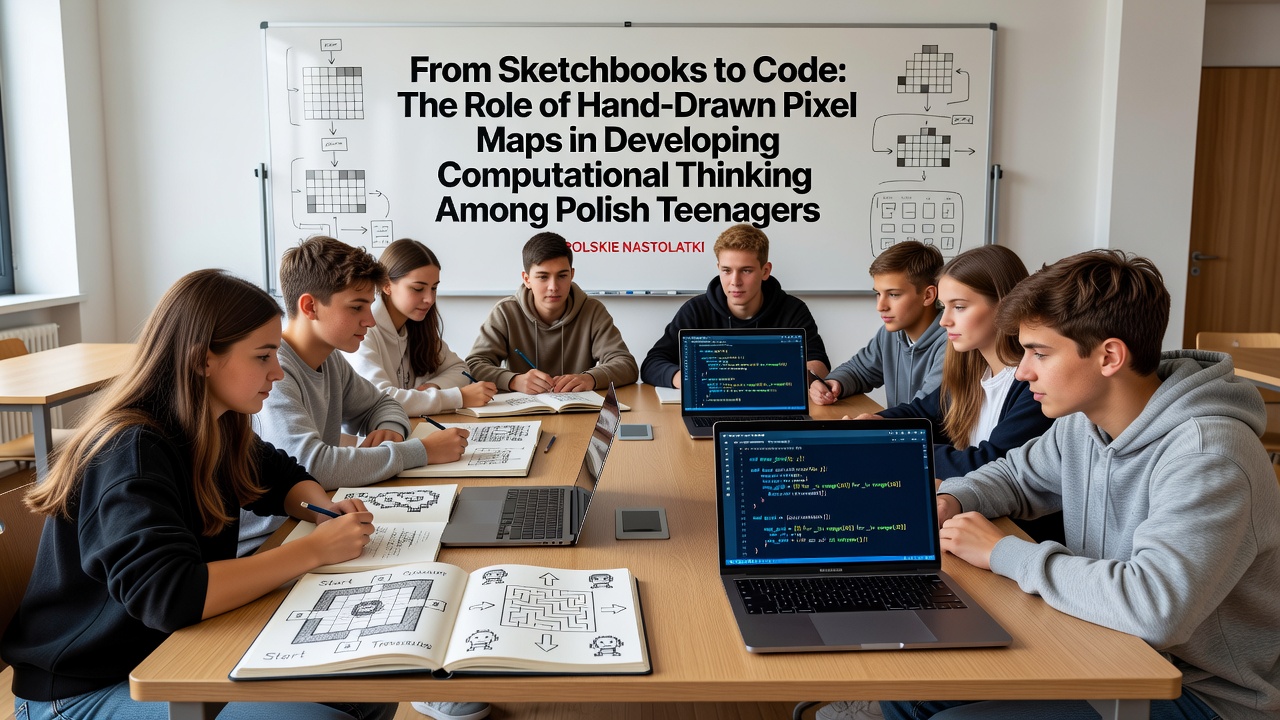
Polish secondary schools have integrated hand-drawn pixel maps into informatics lessons since the early 2020s, and these exercises require students to plot coordinates, mark boundaries, and trace routes across grid-based paper before translating those diagrams into code. Teachers in cities such as Kraków and Gdańsk report that the process begins with simple 10-by-10 grids where teenagers shade cells to represent obstacles or targets, and the activity extends over several class periods to include larger 20-by-20 layouts that incorporate multiple starting points and conditional rules. The sequence moves from freehand sketches on graph paper to precise measurements using rulers and markers, which builds accuracy in coordinate notation, and students record each decision in notebooks that later serve as reference documents during coding sessions. Data from the Polish Ministry of National Education indicates that more than 12,000 teenagers participated in such programs during the 2024-2025 academic year, with participation rates highest in schools that allocate at least four instructional hours per month to the combined drawing and programming sequence. Observers note that the hand-drawn phase encourages repeated revision because erasing and redrawing cells costs little time or materials, whereas early code edits can introduce syntax errors that slow progress; this low-stakes iteration appears to strengthen planning habits before any text editor opens. Researchers at the University of Warsaw documented in a 2025 study that students who completed eight weeks of pixel-map sketching scored 18 percent higher on tasks measuring decomposition and pattern recognition than peers who started directly with block-based coding environments.Mapping Techniques and Skill Progression
Students typically begin with single-path drawings that connect two points while avoiding shaded obstacles, and they advance to multi-branch structures that require decisions at junctions marked by different symbols. Each map includes a legend that defines colors for walls, open spaces, and collectible items, and teenagers must update the legend whenever rules change, which reinforces documentation practices used later in software projects. Teachers observe that the physical act of counting cells aloud while drawing helps internalize distance calculations, and those counts transfer directly into loop parameters once students move to Python or JavaScript implementations.
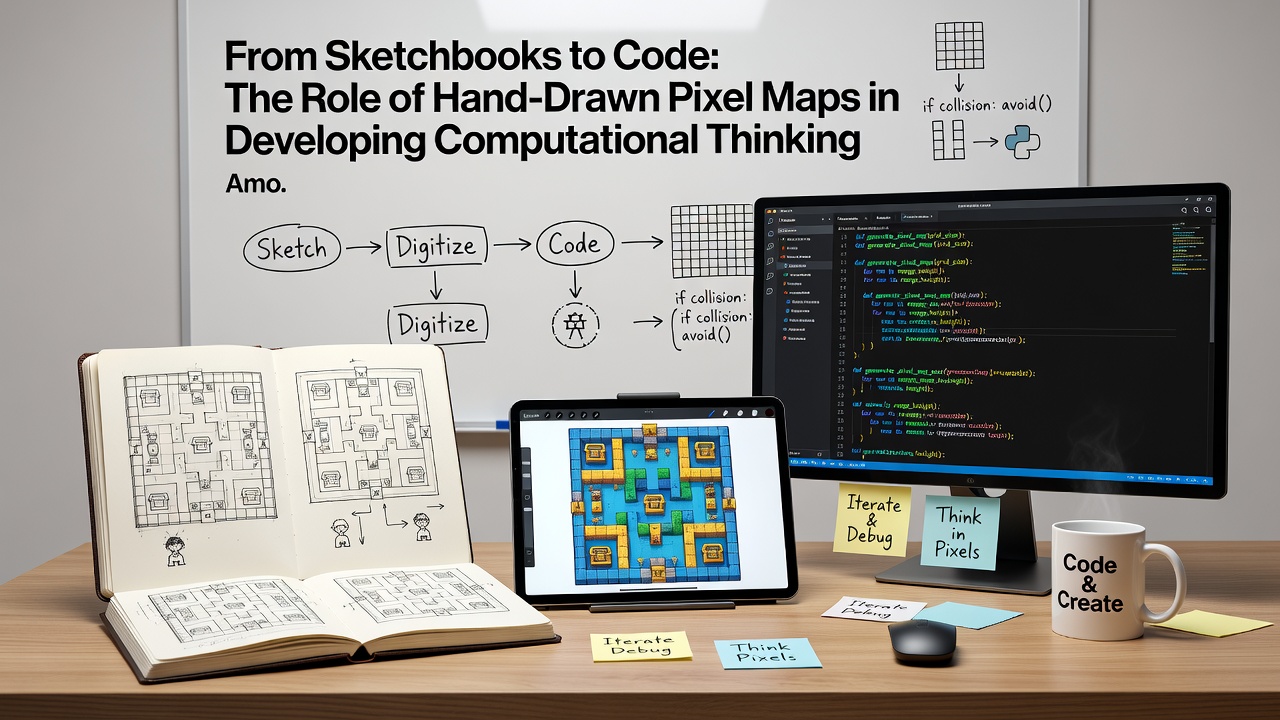
Workshops organized through regional teacher networks supply standardized graph paper templates along with digital scanners that convert finished drawings into pixel images for side-by-side comparison with code output. One program in the Wielkopolska region pairs each sketch with a corresponding grid array in a spreadsheet, allowing teenagers to verify that row and column indices match their paper coordinates before any programming begins. The transition occurs in stages: first the drawing receives numeric labels, then those labels become array declarations, and finally conditional statements control movement across the same grid in code.
Integration with National Curriculum Standards
The Polish informatics curriculum updated in 2023 lists grid-based problem solving as a required component for students aged 13 to 16, and hand-drawn pixel maps satisfy the requirement for visual representation before algorithmic implementation. Schools receive guidance from the Centre for Education Development that encourages at least one project per semester where students submit both the paper map and the corresponding code file. Assessment rubrics evaluate the clarity of the drawn legend, the correctness of coordinate references, and the fidelity between the sketch and the executed program output.
November 2026 marks the scheduled release of a national evaluation report that will compare student performance across regions that adopted the sketch-first approach against those that delayed its introduction, and preliminary figures shared at teacher conferences suggest measurable gains in spatial reasoning scores. External evaluators from the European Commission’s education monitoring unit have visited several participating schools to observe how the combined paper-and-screen method aligns with broader digital competence frameworks.
Examples from Classroom Practice
In one Warsaw lycée, a class of 28 teenagers spent three weeks designing pixel maps that simulated a simple maze game; each student produced four iterations on paper, received peer feedback on path efficiency, and then implemented the final version using nested loops. The resulting code files contained an average of 45 lines, and 22 of the 28 programs matched the original drawing without discrepancies after the first test run. A parallel class in a rural school near Białystok followed the same sequence but used larger grids printed on A3 sheets to accommodate group work, where teams of three shared a single map and negotiated cell placements before dividing coding tasks.
Teachers report that students who struggle with abstract coding concepts often produce clearer logic once they have externalized the grid on paper, and the drawings provide concrete artifacts that parents can review during school meetings. Resource kits distributed through the OECD education portal include printable templates and example legends that align with international computational thinking benchmarks.
Conclusion
Hand-drawn pixel maps continue to serve as an entry point that grounds computational thinking in visible, revisable artifacts before teenagers encounter syntax requirements, and Polish schools have scaled the practice across diverse geographic and socioeconomic settings. Ongoing data collection through 2026 will clarify long-term effects on problem-solving transfer, while existing records show consistent alignment between drawn coordinates and coded behavior when the sketching phase precedes programming. The method remains embedded in curriculum guidance and teacher training modules that emphasize the progression from paper grids to executable logic.