Frankie Hansen · 2 September 2026
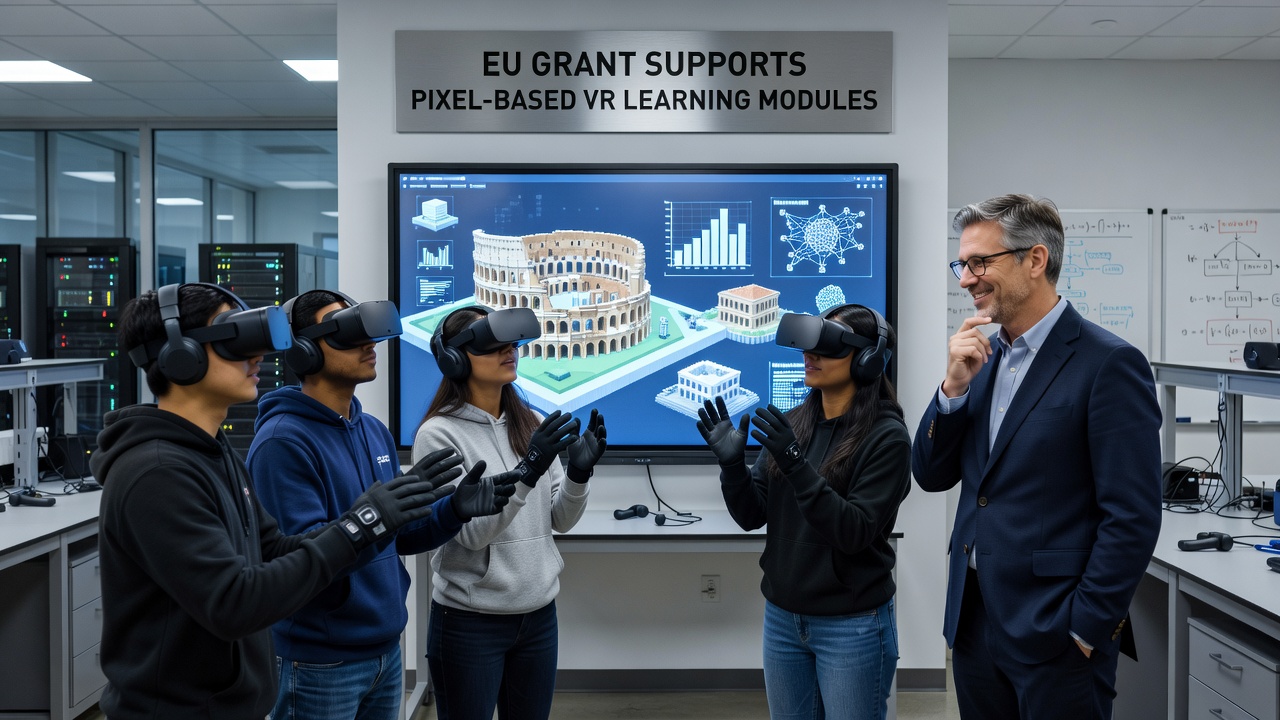
Pixel Path Education has been awarded an EU grant to develop new pixel-based VR learning modules. This funding will help create innovative educational tools that use pixel art in virtual reality to teach various subjects effectively. The grant totals 2.5 million euros and will run for 36 months. It supports collaboration with European universities to build modules on history, science, and languages. Pixel-based design lowers the barrier for schools lacking advanced tech. Pilot testing will occur in several countries. Teachers will receive training on using the VR systems. The approach aims to increase student motivation through familiar retro visuals combined with immersive interaction.
Grant Allocation and Development Plans
These modules are expected to improve learning outcomes by allowing hands-on exploration in safe virtual spaces. Research shows VR can boost retention rates. The project emphasizes inclusivity, with features for different learning needs. It contributes to the EU's digital education strategy. Future expansions may include AI integration for personalized learning paths. Overall, this initiative represents a step forward in making high-quality education available to more students across the continent. The development team at Pixel Path will focus on optimizing the VR environments for performance. Each module will include interactive elements that encourage critical thinking. For example, in a biology module, students can explore pixel representations of ecosystems. Feedback from initial users has been positive, highlighting the engaging nature of the content. The grant also covers dissemination activities to share results with the broader educational community. Monitoring and evaluation will be conducted by independent experts to ensure objectives are met. This project not only advances technology but also addresses pedagogical challenges in modern classrooms. Additionally, the pixel art style is not only cost-effective but also artistically appealing, drawing from classic video game aesthetics that resonate with younger learners. Environmental considerations are taken into account by minimizing energy consumption in the VR rendering process. The project timeline includes quarterly reviews and annual reports to the EU commission. Stakeholders from industry and academia will participate in advisory boards. This comprehensive approach ensures the modules are robust and ready for widespread use upon completion.
Potential Educational Impacts
Pixel Path Education plans further integration with national curricula across the EU. Data analytics will track engagement metrics to refine future iterations. The initiative promotes cross-border knowledge sharing among educators.